
Logan and Albert Conservation Association
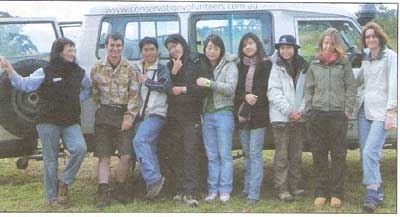 A TEAM of international young volunteers from Hong Kong, Germany, Korea, Taiwan, UK and Belgium has arrived for the next phase of the "Rescue Action for the Veresdale Scrub" managed by the Logan and Albert Conservation Association (LACA). The team of seven young people and team leader Myrium De Rignies has been provided by Conservation Volunteer Australia to help LACA on the Bilarabyn Reserve site at Veresdale. The one per cent of the remaining areas of the Veresdale Scrub stretch across the Scenic Rim and Logan City Councils from Gleneagle to Cedar Vale.
Team leader Myrium De Rignies (left) with the LACA volunteers about to tackle rescue action at Veresdale Scrub with project leader Carla Parker on the right.
 The Minister for the Environment, Heritage and the Arts has formulated a proposal under Part 13A of the Environment Protection and Biodiversity Conservation Act 1999 (EPBC Act) to amend the List of Specimens taken to be Suitable for Live Import . A draft assessment report has been prepared by the Department of the Environment, Water, Heritage and the Arts (DEWHA) against the terms of reference approved by the Minister. The draft report assesses the suitability of import of the Savannah Cat into Australia. Comments were invited on the draft report for 20 business days, closed on 17 July 2008.
Savannah cats, which can weigh more than 13kg, are described in the report as ''the result of selective breeding to establish desirable features (eg: large ears or wild-looking colouration and patterns) or temperament suitable for demand of the companion cat market''.
Mr Garrett said the report suggested the potential breeding in of wildcat genes to the existing feral cat population could lead to even more killing of Australian native animals. Savannah cats are a cross between a serval, which is an African wildcat, and a domestic cat and they can grow much larger than normal domestic cats. This report notes that there is potential for these cats to adapt to the Australian environment. Estimates suggest there could already be up to 12 million feral cats across Australia and they are already one of the single biggest killers of Australian native animals. The report also suggests that the potential breeding-in of wildcat genes to existing feral cat populations could see them develop even better hunting skills.
The minister said he would not hesitate to use his powers to prohibit the importation of the cats ''if it is necessary to protect the environment''.
Mr Garrett has allowed 20 working days for comment on the draft report.
WPSQ has made a submission to the federal government commenting the proposal to amend the List of Specimens Taken to be Suitable for Live Import (Live Import List) urging a ban on the import of savannah cats. WPSQ is urging a blanket change to the legislation that defines all 5th generation hybrids as domestic.
Visit the web page Savannah cats: the case against importation to read more about this issue.
RSPCA Australia has commented that allowing Savannah cats, which are currently classed as domesticated after five generations of breeding from their wild ancestors, into Australia would be a huge mistake.
Australian veterinarians have also commented strongly against the importation of more wild-domestic pet hybrids like the savannah cats currently in quarantine.
The report Draft environmental assessment of the suitability of the import of the Savannah Cat (Domestic Cat x Serval hybrid specimens) into Australia 19 June 2008 is available online here.
Comments received and any relevant additional information provided will be considered by DEWHA in finalising the assessment report.
Submissions should be in writing and sent to
Director
Exotic Species Regulation Section
Wildlife Branch
Department of the Environment, Water, Heritage and the Arts
GPO Box 787
CANBERRA ACT 2601
or to
This email address is being protected from spambots. You need JavaScript enabled to view it.
Australian wildlife is already endangered by many threats - habitat clearing, climate change, introduced feral animals.
Senator Christine Milne from the Green presented a petition to the federal government 26 June 2008. This is available in Hansard. This petition can be accessed here. This was begun by an online herpetology discussion group.
The University of Sydney's professor of ecology, Chris Dickman, is warning these hybrid cats would be uncontrollable in Australia. "It hasn't come in through the usual quarantine processes or risk assessments that would otherwise need to be done." Forty of the nation's leading feral animal researchers are calling for urgent changes to prevent hybrid supercats from being imported into Australia.
The Australian environment is suffering from the humble domestic cat gone feral. Imagine the carnage from a bigger stronger feral cat bred from an already wild animal.
For more coverage on this topic see news from Invasive Animals Cooperative Research Centre's CEO Tony Peacock at this site and petitions both for and against importation.
Information on the damage feral cats are currently doing is provided at this cat facts page.
Help stop the importation of hybrid cats such as "Savannah cats"! Please participate by signing the petition and let the Honorable Peter Garret, Minister for Environment, Heritage and The Arts and the Senate know that these hybrid killing machines don't belong here or comment on the draft report by 17 July 2008.
An African Serval is the most efficient wild cat hunter in Africa. Australia's quarantine regulations make it legal for a cat that is only five generations away from a purebred serval to come into the country. In a 2007 paper in Science, Carlos Driscoll of Oxford University showed that domestication of the cat probably began 12,000 years ago and was completed 8,000 years ago. New designer breeds of cat didn't exist 25 years ago.
Keeping your cat inside or in a cattery - see more here and here - will keep your pet safe and also protect our wildlife.
 The Rescue Helpline is available for bat rescue advice and assistance. The Helpline services the Greater Brisbane Area, taking in Brisbane, Ipswich, Logan, Redlands and Pine Rivers.
The Helpline is staffed by local volunteers, who have been trained in Bat rescue, care and rehabilitation. It is an EPA requirement that all bat hanlders be vaccinated against Australian Bat Lyssavirus (ABL). All of our volunteers have been appropriately vaccinated.
Rescue Mobile - 24 hr service - 0488 228 134
Bat Information Help Line ph : (07) 3321 1229
.rescue.education.conservation.habitat.
ENDANGERED REGIONAL ECOSYTEM is threatened by subdivision and development application being assessed under out of date planning documents. A copy of this planning scheme is available on Logan's website here. It is a pdf file of 171 pages. It was first published 9 February 1985. The Beaudesert Shire Planning Scheme 2007 (commenced 30 March 2007) can be accessed from this webpage.
 Write a letter to the editor of your local paper to help make the Government feel the pressure to endorse Garnaut's recommendations and get the positive aspects of the report heard. The Government are currently considering the Garnaut Report but it is the polluters' voices who are being heard in the media.
GetUp! have provided a handy tool to help to write to the paper of your choice. There is a Climate Solutions Info Sheet with the key findings of the Garnaut Review. Read that Info Sheet here. Go to this campaign page.
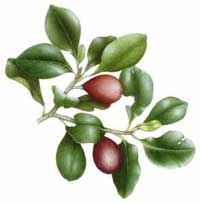 Bilarabyn Reserve is the area where Logan and Albert Conservation Association is working in partnership with Scenic Rim Regional Council natural resource management staff, and other, non government organisations, to revegetate a large parcel of land to restore the dry vine scrub rain forest that existed pre farming activities.
Carla Parker is the Project Officer managing and coordinating work teams and volunteers. Botanical expertise is provided by Janet Hauser who is also a talented botanical artist who co-authored with Jan Blok, and illustrated Fragments of Green: An Identification Field Guide for Rainforest Plants of the Greater Brisbane Region to the Border Ranges. Andy Grodecki is co-manager and our natural resource management guru.
Our partner groups will use our documentation and maps to guide their onground work. These documents can be viewed  Bilarabyn Reserve Managment Plan July 2008 Bilarabyn Reserve Revegetation Management Plan map
Global agricultural practices must change if we are to reduce hunger, poverty and environmental degradation, say a set of comprehensive international reports released by the International Assessment of Agricultural Science and Technology for Development (IAASTD) in April. These reports present a new paradigm for agriculture that represents an evolution of the concept of agriculture - focusing only on food production - to one that also enhances rural livelihoods while ensuring environmentally, socially and economically sustainable development.
An executive summary of the Synthesis Report is available here and as a pdf file here. A global summary for decision makers is available here.
Professor Roger Leakey, Australia's coordinating lead author of the global report, says the key actions identified in the global and regional reports can be summarised as:
*re-direction of agricultural science and technology - moving away from processes that have profited primarily large-scale enterprises, to processes that address the basic needs of the world's 900 million small farmers and lessen environmental impacts;
*innovation - initiatives that allow local communities to set the agenda alongside scientists and policy-makers;
*investment - in rural infrastructure, local governance and education.
'The overriding challenge is to revitalise farming processes and rehabilitate natural capital. To do this we need to even up the balance between "globalisation", which is the dominant paradigm now, and "localisation",' Professor Leakey says. Read more here.
The story was provided by CSIRO Publishing in Ecos Magazine.
TrekNature is a dedicated nature and wildlife photo community, dedicated to fostering a global community interested in nature photography from around the world. TrekNature members strive to provide engaging photographs and useful critiques for each other and the entire internet community. The underlying theme of TrekNature is learning more about the world through nature photography. TrekNature fosters this by allowing photographers to display their work grouped by regions in a supportive and orderly environment. This is accomplished by an easy-to-use system which encourages people to critique each other's work. Integrated with this system are forums designed to encourage discussion about specific photos, countries, and general topics. Since TrekNature is globally oriented, it is completely multilingual capable, allowing for the widest audience possible.
Photo galleries are arranged by countries Australia is here.
The Queensland Government has produced a state of environment (SoE) report every four years and has completed three reports to date: the 1999, 2003 and 2007 reports. The EPA is the lead agency in the preparation and delivery of the report. The reports describe:
the pressures acting on the state's air, land, inland and coastal waters, biodiversity, and natural and cultural heritage;
the state or condition of the environment; and
the responses by society to reduce pressures and protect and conserve the state's natural and cultural heritage.
The reports are an important tool for environmental management in Queensland. They provide an information base to support the community, industry and government in working towards improved environmental management and the sustainable use of our natural resources.
The report describes the environment in terms of nine major themes (chapters): sustainability; atmosphere; land; inland waters and wetlands; the coastal zone; biodiversity; invasive plants and animals; human settlements; and natural and cultural heritage. Each chapter is made up of a series of issue papers. The report concludes with an assessment of the key legislation relevant to the Environmental Protection Agency in achieving environmental outcomes.
Links to the report, the government's responses, sources are available from the EPA website here
Key policy responses are available here
Planning for a rapidly growing economy and population
Moving freight and reducing congestion
Understanding climate change and reducing greenhouse gas emissions
Managing pollution and waste
Delivering water security
Maintaining and improving liveability
Sustainable use and management of natural resources
Minimising the effects of invasive plants and animals
Understanding and protecting our natural and cultural heritage
The June 2008 issue of Spinifex, QCC's newsletter has some critiques of the Queensland State of Environment Report by Carol Booth and Simon Baltais. This is available for download here.
PARADISE LOST?
A report released by The Wilderness Society, WWF-Australia and Queensland Conservation shows that Queensland's environment is in a state of decline after ten years of Labor in power. In response, the conservation groups are seeking a strong commitment from Queensland Premier Anna Bligh to usher in a new era of environmentally responsible policy to build on some of the successes and address the major deficiencies in areas such as climate change, biodiversity protection and water management
Paradise Lost?: A review of Queensland Labor Government environmental policies 1998 - 2008 rates the Government's performance in the areas of climate, water and biodiversity. It uses the State of the Environment Queensland 1999 and 2007 reports to track the impact of Queensland Government policies in protecting the environment.
Download the report here.