
Logan and Albert Conservation Association
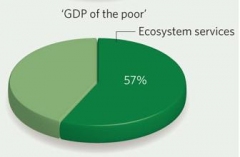
Pavan Sukhdev also has an article Costing the Earth available. He is study leader of the Economics of Ecosystems and Biodiversity (TEEB) project, United Nations
Clean air, fresh water, the flood protection provided by wetlands, the carbon-storage capacity of forests: these are examples of natural systems and processes that we largely take for granted. We consider them 'public goods': they are available to everyone; there is enough to go round; and one person's enjoyment of them does not impede another's. They are not traded in markets, not priced and they are mostly available for free.
 Although efforts to sustain biodiversity fall short, the issue is gaining attention as nations prepare for next year's 2010 International Year of Biodiversity summit. With nations admitting that they will fail to achieve their goal of significantly cutting biodiversity loss by 2010, a flurry of work is under way to develop new, more robust targets and ways of monitoring progress. These must be ready by next October, when the 193 parties to the Convention on Biological Diversity (CBD) meet in Nagoya, Japan.
The article is available online though there is a cost for premium content from Nature 462, 263 (2009) | doi:10.1038/462263a http://www.nature.com/news/2009/091118/full/462263a.html. In addition to the highly visible components there are the unseen microbial biodiversity which is often neglected in most of biodiversity conservation programme. These are very essential for sustaining life on planet earth.
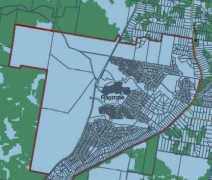 New koala planning provisions will be introduced in December 2009 and comprise:
 New koala conservation state planning regulatory provisions: the Proposed South East Queensland Koala Conservation State Planning Regulatory Provision ( 746 KB 38p) and proposed koala habitat mapping that will regulate new development in koala habitat areas. You can access the several area maps from this dip page http://www.dip.qld.gov.au/maps/seq-koala-habit-regulatory-maps.html
Map 24 http://www.dip.qld.gov.au/resources/map/koala-regs/koala-sprp-maps-24.pdf does not show any koala habitat in the Flagstone area? Difficult to believe - if you see all the surrounding habitat? http://www.dip.qld.gov.au/resources/map/koala-regs/proposed-seq-koala-conservation-seqkc-map-24.pdf
KOREN HELBIG reporter from Albert and Logan News www.albertlogannews.com.au published our concerns in 25 November 2009 edition. She also provided an opportunity for Logan City Council to comment. Copy here  alb005.pdf
A NEW group lobbying against a large housing development planned for Bahrs Scrub has likened the Logan City Council proposal to the Traveston Dam debacle. Save Bahrs Scrub spokeswoman Petrina Maizey said thousands of ratepayer dollars would be wasted on preliminary studies and impact statements needed to assess the 4000-lot development's viability.
She said such studies would prove that the 510ha zone bordered by Wuraga and Sharton Roads was environmentally significant and that ‘‘exceptional'' flora and fauna must be protected.
‘‘Ratepayers' money will have to be used by the council only to find what our preliminary investigations and other studies have already made abundantly clear - hat this development is not viable physically, environmentally or economically on 70 to 80 per cent of the selected site,'' Ms Maizey said.
The black plum of Bahrs Scrub Pouteria Eerwah is listed as a federally endangered plant. In another area of Logan we have another plant commonly called Veresdale Plum - also Pouteria Eerwah and LACA, Logan and Albert Conservation Association, has established a recovery and management plan for that species.
 It is always the right time to write to our elected representatives to tell them how you feel about an issue you care about.
There are many 'things' happening locally, nationally and globally of concern to those of us who understand how important it is to conserve and enhance all existing biodiversity to protect the wellbeing of future generations - as well as us now.
The longterm survival of the iconic koala in south east Queensland is one that is swinging towards extinction. It is difficult to imagine south east Queensland
without koalas in their natural bushland state.The fate of our koala now rests with the federal governments 'scientific committee'. Concerned groups have been monitoring and reporting for years. The results of the recent RSPCA - LACA phone in is available here at http://www.rspcaqld.org.au/wildlife/
RSPCA Qld's Wildlife Department and LACA praise Queenslanders who took part in the October 2009 Koala Count. However Wildlife Coordinator Janet Gamble said the numbers of koalas spotted were disappointing and proved that we should have very real concerns for the animal's future.
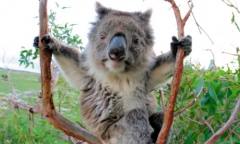
Monday 23 November 2009 British online edition of The Guardian reported on the ongoing battle being fought for many years to protect Australia's iconic koala by the koala campaigners from the Australian Koala Foundation, scientists, conservation and wildlife care groups and concerned citizens . Journalist Gideon Haigh presented the situation.
Tuesday 10 November 2009 in Canberra, representatives of the Australian Koala Foundation (AKF) took a long and determined campaign for better protection of the creature to the government's "threatened species scientific committee", following a request for a review of the animal's status by environment minister Peter Garrett. The foundation presented what they say is definitive evidence of a sharp decline in koala numbers due to habitat destruction and disease. Its message was stark: the koala would be extinct "within 30 years". Hits on its website instantly doubled, and concerns were expressed about the impact on Australia's tourist industry: polls consistently show the koala to be the country's most popular animal with visitors.
USING THE RIGHT WORD HAS NEVER BEEN MORE IMPORTANT!
Unfortunately this media coverage - as many before it uses the term 'market gardens' and 'intensive horticulture' as if they 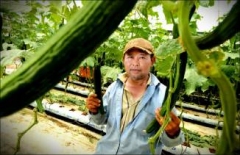 mean the same thing! Ask any horticulturalist or organic gardening industry person and he or she can point out the many differences in farming practices, methodology and crops grown. Most of us do not take much more interest in the fruit and vegetables we eat than the price.
The article below reproduces the text from http://albert-and-logan.whereilive.com.au/news/story/growers-face-scrutiny/ as reported by Judith Maisey 19 November 2009 online edition.
TOUGHER regulations on market gardens by Logan City Council could send some growers broke, industry insiders warn.
Growing Wiser spokeswoman and herb grower Lisa Crooks said the industry was already heavily regulated by federal, state and local governments.
On Sunday 29 November, the community forum will be held at the Forest Lake State High School, High Street, Forest Lake.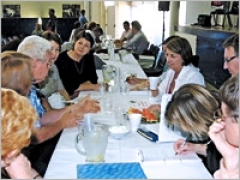
Everyone is welcome to attend.
The program includes informal and formal deputations, where individuals and organisations can discuss issues directly with Ministers, Parliamentary Secretaries and Directors-General. Deputations are limited to 15 minutes.
Sunday community forum program:
1-1.30pm Registration. Information and advice on government services available. Refreshments provided.
1.30- 2.30pm Community forum. Includes a question and answer session.
2.30-3.30pm Informal deputations. No booking is required.
3.30-5pm Formal deputations. A booking is required.
See the Pemier's website for more information http://www.thepremier.qld.gov.au/community/2009/forest_lake_ipswich.aspx
Unfortunately deputation request applications were due 12 noon Wednesday, 18 November 2009. However you lose nothing by trying.
Email This email address is being protected from spambots. You need JavaScript enabled to view it.
Environment, conservation, or environmental sustainability do not appear to have been discussed in past published documents - except for energy matters.
Member for Ipswich - Rachel Nolan MP and Minister for Transport should be present.
Although the very High conservation values are well known by authorities they are not officially recognised or acknowledged and recorded. The unique habitat zone called Bahrs Scrub covers suburbs / regions of Belivah, Bahrs Scrub, Windaroo, and Holmview. It is zoned under the current SEQ Regional Plan as a Major Development Area MDA for 11,000 dwellings - to match a density ratio per hectare nominated by state government.
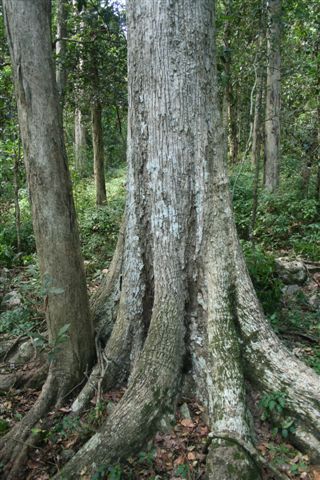
Neighbouring areas have already been expanding under non-sustainable development practices with impacting infrastructure and mass clearing of forested areas. Koalas and platypus are know to live in the area as they are frequently seen. There is an existing Conservation Park which is very limited and threatened by urban encroachment as there are no buffers. Being home to rare, threatened, vulnerable, and endangered species of flora and fauna, including koala and platypus has not yet afforded the guarenteed protection one would expect in a contemporary society.
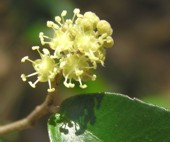
Newly discovered in 2008, unique flora species have recently been found to occur in this area and have Bahrs Scrub as part of their name.
This position is one that concerned conservationists welcome.
An understanding and respect for the term ecologism is essential to progress survival of Australia's biodiversity.
Many of us practice shallow ecologism: that species have value only in relation to their benefit to human beings. Deep ecologism recogizes and accepts that species and landscapes have an intrinsic value and right to thriving existence.
Australia's National Biodiversity Strategy hovers between the two. However, we believe that overt commitment to deep ecologism required by all
Australians if biodiversity decline is to be reversed.
Australia's first national biodiversity strategy, the National Strategy for the Conservation of Australia's Biological Diversity, was prepared by the Australian and New Zealand Environment and Conservation Council (ANZECC) and endorsed by the Council of Australian Governments in 1996.
The strategy fulfills Australia's obligations under the International Convention on Biological Diversity.
A review of the National Biodiversity Strategy has been conducted by the Natural Resource Management Ministerial Council and a new strategy is expected to be endorsed in November 2009. You can follow the review and read submissions from this page.
Does legislation protect biodiversity?
Mostly no - legislation fails to ensure protection of unique biodiversity hotspots such as Bahrs Scrub!
The priority of current Environment and Urban Planning Laws is not to protect environment.
Priority is to mitigate species loss and/or to ensure environment does not interfere with project.
Such a perspective inevitably leads to habitat loss and therefore species loss.
Queensland is the last bastion of ‘injurious affection' ---old zonings cannot be changed without incurring massive compensation costs.
Judges, upon whose attitudes final decisions often hinge, do not have a deep ecologism perspective.
Unscrupulous developer practices and accidental catastrophes negate conservation concerns.